
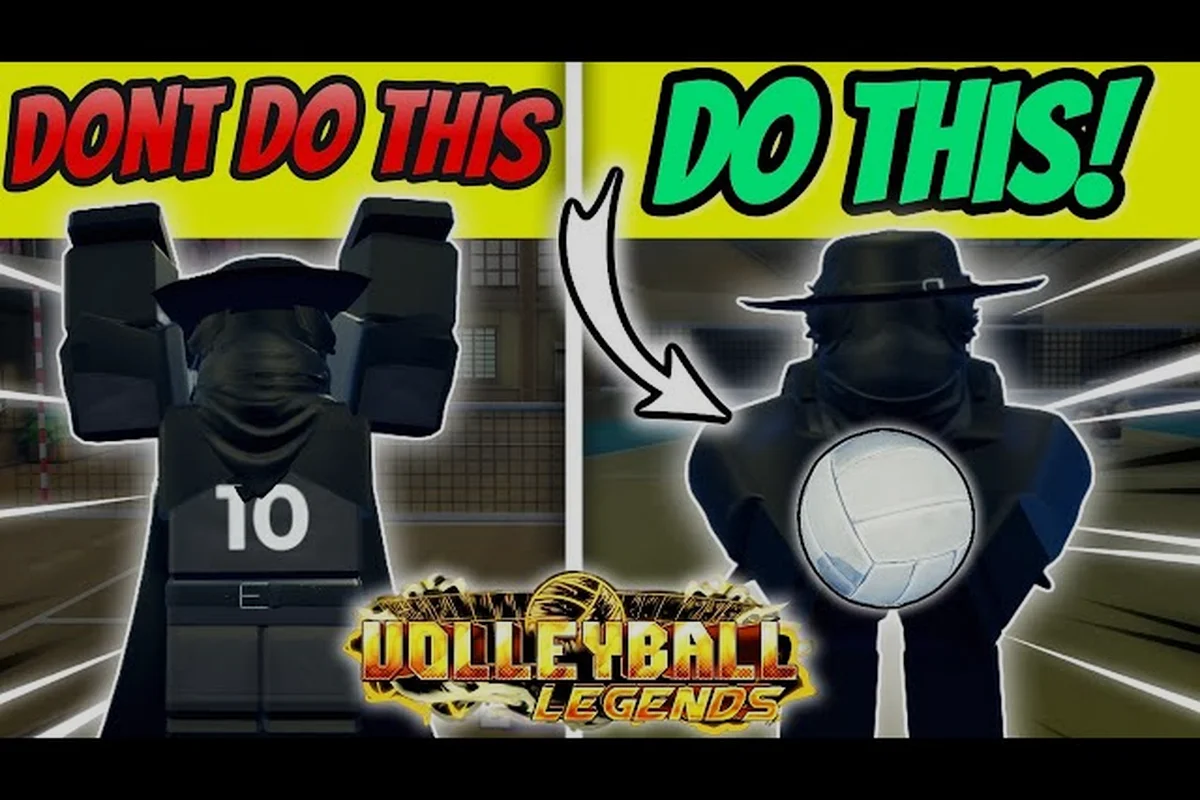
A weak block turns a winnable rally into a free point for the opposing spiker. Learning volleyball legends how to block with pro timing transforms your front-row presence from a passive obstacle into the most intimidating weapon on the court. This guide breaks down the exact jump windows, positioning reads, and defensive rotations that separate consistent stuff blocks from embarrassing whiffs.
Reading the Hitter Before the Jump
Most players lose the block before they ever leave the ground. The real work happens in the half-second before the setter releases the ball, when the opposing offense telegraphs its entire plan through body language and approach angles. Understanding volleyball legends block timing starts with recognizing that you are not reacting to the spike itself—you are reacting to the setter's hands, the hitter's approach speed, and the trajectory of the set.
The first read is the setter's posture. When a setter squares their shoulders to the outside pin and extends both arms fully, the ball is almost certainly heading to the left-side hitter. A softer, shorter release with a slight backward lean usually indicates a middle attack or a quick set. Community testing consistently shows that players who track the setter's release point rather than the ball's apex get into blocking position roughly 0.3 seconds earlier, which is often the entire margin between a clean stuff and a tooled block.
The second read is the hitter's approach rhythm. Power hitters in Volleyball Legends typically use a four-step approach: slow, slow, fast, fast. The final two explosive steps signal the jump moment. If the hitter stutter-steps or slows their arm swing, they are likely tipping or rolling the ball short. If they accelerate through the last two steps with a full backswing, prepare for a hard-driven spike at the net.
Tracking the Ball Arc
The set's height and distance from the net dictate your lateral movement. High outside sets give you time to shuffle and square up, while low quick sets to the middle demand an immediate vertical jump with minimal drift. A useful mental model is the three-zone read: sets within one meter of the net require a straight-up block, sets two meters off the net allow for a slight forward press, and sets pushed to the antenna force you to angle your outside hand inward.
| Set Location | Block Adjustment | Common Mistake |
|---|---|---|
| Tight to net (≤1m) | Jump straight up, press palms over tape | Drifting forward into net |
| Off the net (2m) | Small forward hop, seal with outside hand | Leaving gap between arms |
| Wide to antenna | Angle inside hand toward court | Reaching sideways, losing height |
| Quick middle set | Immediate vertical jump, no shuffle | Waiting to read trajectory |
Each of these adjustments changes how you apply volleyball legends block timing, because the ball's arrival speed varies dramatically across set types. A tight set arrives fast and flat, rewarding a pure vertical contest, while an off-speed set gives you time to close the gap but punishes overcommitment.
The Jump Window and Hand Positioning
The single most common blocking error in Volleyball Legends is jumping too early. When you leave the ground before the hitter commits to their swing, you hang in the air while the spiker adjusts and tools the ball off your outside hand. The correct jump window opens when the hitter's hitting arm reaches its highest backswing point—not when the ball crosses the net plane.
A practical drill that high-level players use involves counting the hitter's approach steps aloud. On the fourth step, begin your crouch. As the hitter's arm swings forward, explode upward. This sequencing creates a negative split where you reach your maximum block height just as the ball arrives, rather than peaking too early and descending into contact. Community reports from ranked matches suggest that players who master this delayed jump see their stuff block rate climb by nearly 40 percent compared to early jumpers.
Hand positioning matters as much as timing. Your palms should face the opponent's court at a slight downward angle, with thumbs pointed up and fingers spread wide. The goal is to seal the net—meaning your arms form a flat wall with no gaps for the ball to sneak through. Press your outside hand toward the middle of the court to cut off the cross-court angle, while your inside hand stays firm to deny the line shot.
Penetrating the Plane
Advanced blockers do not just reach straight up—they press across the net. This means extending your arms over the tape and into the opponent's airspace, which shrinks the available hitting window. The more you penetrate, the less angle the spiker has to work with. However, penetration requires precise body control, because leaning too far forward causes a net violation.
| Block Style | Net Clearance | Best Used Against |
|---|---|---|
| Soft block | Hands at tape height | Off-speed tips, roll shots |
| Standard block | Wrists above tape | Balanced hitters |
| Penetrating block | Forearms over tape | Power hitters, tight sets |
| Swing block | Full arm extension | Outside attacks, high sets |
The swing block deserves special attention because it generates the most height and power. Instead of shuffling to position and jumping straight up, you take a lateral step, swing both arms backward, then drive them forward and upward as you jump. This momentum carries you higher and lets you cover more horizontal distance, which is essential when closing out on a fast outside set.
Defensive Pairing: Blocks, Dives, and Sets
A block is never an isolated action. It works as part of a defensive triangle with diving and setting, where each element covers the others' weaknesses. When your block forces a tip or deflection, someone behind you must be ready to convert that broken play into a controlled pass. This is where understanding volleyball legends how to dive becomes essential for complete defense.
The block-and-cover rotation works like this: when the middle blocker jumps, the back-row defender shifts toward the block's shadow to cover any ball that rolls off the fingertips. If the block deflects the ball straight down, the setter or libero dives to keep it alive. If the block tools the ball out of bounds, the defense resets immediately. Teams that practice this rotation as a single unit consistently win the long rallies that decide close sets.
Dive Save Mechanics
Executing a proper dive save requires committing your body fully to the floor while keeping your platform flat. The key is to slide on your chest, not your knees, and extend your arms forward with locked elbows. Many players hesitate at the last moment, which causes the ball to drop between their forearms and the court.
| Dive Type | When to Use | Body Position |
|---|---|---|
| Forward dive | Short tips, deflected blocks | Chest slide, arms extended |
| Lateral dive | Wide shots, line attacks | Side roll, one-arm reach |
| Pancake | Balls dropping fast | Hand flat on floor, palm up |
| Recovery dive | After block landing | Quick roll, immediate reset |
The pancake is the flashiest and most effective volleyball legends dive save technique. You slide your hand flat on the floor just before the ball lands, letting it bounce off the back of your hand and pop upward for a teammate. Timing is everything—too early and the ball rolls off your fingers, too late and it hits the floor before your hand arrives.
Setting After the Block
A successful block often ends the point immediately, but a deflected block that stays in play requires a quick, accurate set to transition into offense. This is where volleyball legends how to set connects directly to your defensive game. The player who makes the first touch after a block deflection rarely has time to square up perfectly, so the set must be simple and high.
The transition set prioritizes height over precision. You want to give your hitter enough time to approach and jump while keeping the ball off the net. A common mistake is trying to set too flat after a chaotic defensive sequence, which results in the hitter swinging into a double block with no angle. Instead, push the ball high to the outside pin and let your spiker work against a single blocker.
Building the Defensive Rhythm
Great defensive teams operate on a two-touch rule: the first touch after a block always goes to the setter, and the setter always delivers a hittable ball. This rhythm removes hesitation and prevents the panic plays that turn a winnable rally into a free point for the opponent. When you watch high-level Volleyball Legends matches, notice how rarely the defense looks rushed—even after spectacular diving saves, the next touch is calm and purposeful.
The setting guide covers the full range of hand positions and release points that make transition sets reliable under pressure. For now, focus on keeping your hands soft and your release consistent, because a block that leads to a clean set is worth nearly as much as a block that ends the point outright.
Advanced Blocking Strategies and Court Coverage
Once you master the fundamentals, the next level of volleyball legends how to block involves reading entire offensive rotations rather than individual hitters. Every team has a go-to pattern—a specific set they run when they need a point—and recognizing that pattern lets you anticipate the attack before the setter even touches the ball.
Pay attention to rotation tendencies. When the opponent's best hitter rotates to the front row, expect a higher percentage of sets to that pin. When the setter is front row, watch for quick attacks and setter dumps. When the score is tight late in a set, most teams default to their most reliable outside hitter. Adjusting your block positioning based on these patterns gives you a head start on every jump.
Split Block and Double Block Coordination
The split block guide explains how two blockers coordinate their hands and timing to cover more of the net. The basic principle is simple: the outside blocker takes the line shot, the middle blocker takes the cross-court angle, and both press toward the center to eliminate the seam. Communication is essential, because a gap between two blockers is worse than no block at all.
| Block Formation | Coverage | Weakness |
|---|---|---|
| Single block | One angle | Easy tool, open court |
| Double block | Line + cross-court | Seam between blockers |
| Triple block | Full net coverage | Slow to recover, open backcourt |
| Split block | Two zones, quick recovery | Requires perfect timing |
The double block is the standard for most competitive play because it balances net coverage with backcourt defense. A triple block looks intimidating but leaves massive gaps behind the blockers, making it vulnerable to tips and roll shots. The split block offers a middle ground, with one blocker committing fully while the other stays ready to react.
Reading the Tool Shot
Experienced hitters do not always try to hit through or around your block—they deliberately aim for your outside hand to deflect the ball out of bounds. This is called a tool, and it is the most frustrating way to lose a point as a blocker. The counter is to angle your outside hand slightly inward, which redirects tool attempts back into the court where your defense can play them.
The keyboard controls guide walks through the exact input sequences for adjusting hand angles mid-air, which becomes second nature after enough repetitions. When you consistently turn tool attempts into playable balls, opposing hitters lose their favorite escape route and start making unforced errors.
Frequently Asked Questions
What is the best way to learn volleyball legends how to block?
Start by practicing against a single hitter in training mode, focusing only on jump timing. Count the hitter's approach steps aloud and jump on the fourth step's arm swing. Once you consistently make contact, add lateral movement and hand-angle adjustments. Community data shows that 20 minutes of focused timing drills improves stuff block rate faster than hours of unstructured match play.
How do I avoid net violations when blocking?
Keep your hips behind your shoulders and jump straight up rather than forward. Penetrating the net comes from arm extension, not body lean. If you find yourself touching the net frequently, practice blocking with your heels slightly off the ground and your weight centered. Most net violations happen when blockers drift forward during their jump instead of pressing upward.
When should I use a soft block instead of a full swing block?
Use a soft block when the set is far off the net or when the hitter is known for tipping. Instead of swinging your arms aggressively, simply reach straight up with relaxed hands and let the ball deflect off your palms. This keeps the ball in play and gives your defense time to react, which is often more valuable than attempting a stuff block on an unhittable set.
How does blocking connect to diving and setting?
A block forces the hitter to adjust, which creates deflections and tips that require diving saves to keep alive. The player who makes that save must then deliver a clean set to transition into offense. Teams that practice these three skills together—block, dive, set—create a defensive chain that turns broken plays into scoring opportunities instead of free points for the opponent.
What is the most common blocking mistake in Volleyball Legends?
Jumping too early is by far the most common error. Players see the set coming and leap immediately, then hang in the air while the hitter adjusts. The fix is to delay your jump until the hitter's arm begins its forward swing. This negative split timing keeps you at maximum height exactly when the ball arrives, which dramatically increases your stuff block percentage.