
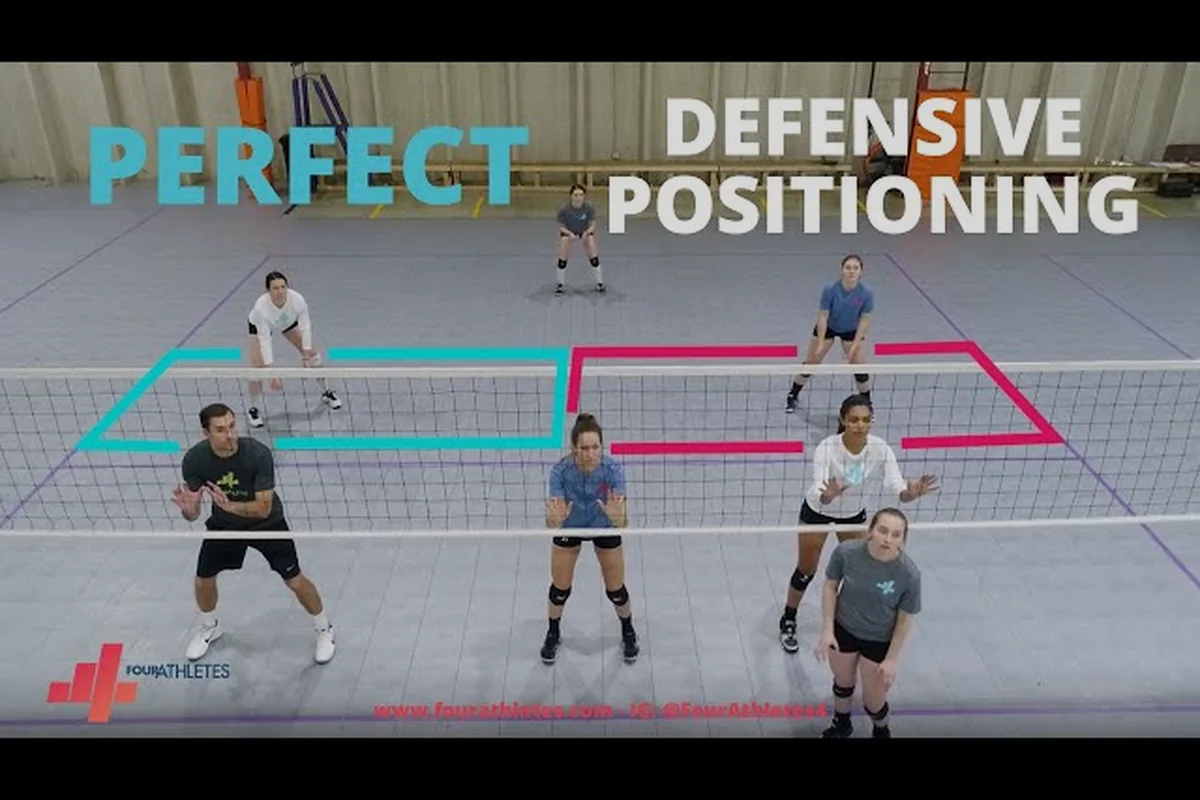
A coordinated front row attack in Volleyball Legends turns a basic bump-set-spike sequence into a scoring machine. The difference between a blocked hit and a clean kill often comes down to middle blocker timing, setter placement, and whether the team reads the defense before the ball leaves the setter's hands. This guide breaks down the exact mechanics, positioning, and communication habits that make front row offense reliable at every skill level.
Core Front Row Attack Mechanics
The front row attack in Volleyball Legends revolves around three positions working in a tight window: the middle blocker runs a fast approach, the outside hitter stretches the block, and the setter decides which option gives the cleanest swing. Understanding how these roles interact is the foundation of any effective offense.
Middle Blocker Timing and Approach
The middle blocker's job is to attack before the opposing block can fully form. In Volleyball Legends, the quick attack option triggers when the middle hitter jumps almost simultaneously with the setter's touch. According to community testing, the ideal timing window is roughly 0.3 to 0.5 seconds after the ball leaves the setter's hands. Jumping too early causes a mistimed swing that floats weakly over the net, while jumping too late lets the defense collapse and stuff the hit.
A reliable middle attack depends on three factors: the setter's tempo call, the middle blocker's approach angle, and the receive height from the back row. When the pass comes in high and tight to the net, the setter can run a one-ball or shoot set, which gives the middle blocker a flat, fast ball to swing on. When the pass drifts off the net, the middle blocker should transition to a slide or a delayed two-ball to keep the attack viable.
The table below compares the main middle attack options and when to use each: it breaks down the set height, the best pass location for each route, the block risk the hitter accepts, and the situational recommended use that emerges from community testing. Reading the columns together matters more than memorizing a single row, because a one-ball that works after a perfect receive becomes a trap when the pass drifts off the net and the opposing middle blocker can camp on the quick attack line. The block risk column in particular tracks how much time the defense has to close, which is why the slide and two-ball trade speed for a safer angle against a disciplined front row.
| Attack Type | Set Height | Best Pass Location | Block Risk | Recommended Use |
|---|---|---|---|---|
| One-ball | Low and fast | Tight to setter | Low | After a perfect receive |
| Shoot set | Flat, quick | Slightly off net | Medium | Against a slow middle blocker |
| Slide | Behind setter | Off the net | Medium | When right-side block is weak |
| Two-ball | Medium arc | Anywhere in front row | Higher | As a safe fallback option |
Players report that mixing the one-ball with the slide keeps opposing blockers guessing, because the defense cannot commit to a single attack line. The middle blocker should call the play early, usually right after the serve receive, so the setter can adjust footwork before the ball arrives.
Setter Placement and Decision-Making
The setter controls the tempo of the entire front row attack. Good setter placement means delivering the ball to a spot where the hitter can swing without reaching, leaning, or breaking rhythm. In Volleyball Legends, the setter guide fundamentals come down to three priorities: reading the block, choosing the right tempo, and disguising the set direction.
A setter who telegraphs the set gives the opposing middle blocker time to close the gap. The best setters in the community use the same hand shape and body posture for every set, then change the release point at the last moment. This disguise is especially important when running a combo attack, where the middle blocker and outside hitter approach at different speeds.
Setters should also track the opposing block's tendencies during the first few rallies. If the middle blocker jumps early on every set, a delayed set to the outside hitter creates a one-on-one situation. If the block stays disciplined, a quick set to the middle can beat the outside blocker's late close. The decision happens in a fraction of a second, which is why setters need to pre-plan their options before the serve.
Building a Coordinated Offense
A front row attack only works when all three hitters and the setter share the same picture of the defense. Coordination in Volleyball Legends is not just about calling plays; it is about spacing, tempo variation, and trust in the system.
Spacing and Approach Lines
Proper spacing prevents hitters from crowding the setter or colliding mid-air. The outside hitter should start wide, roughly one meter from the sideline, and approach at a sharp angle toward the set. The middle blocker starts near the center of the net and approaches straight ahead. The opposite hitter starts on the right side and approaches from behind the setter's shoulder.
This spacing creates three distinct attack lines, which forces the block to spread across the entire net. When spacing breaks down, two hitters end up attacking the same zone, and the block can shut down the offense with a single commit. Community data suggests that teams with consistent spacing convert 20 to 30 percent more of their front row attacks into kills compared to teams that crowd the middle.
The table below outlines the ideal starting positions and approach angles for each front row role, translating the spacing principles above into actionable setup cues: the outside hitter anchors the left pin to stretch the block toward the sideline, the middle blocker runs a tight straight-line path to threaten the quick set before the defense can close the seam, and the opposite hitter loads behind the setter's right shoulder to attack the back-set with a late, hard diagonal that exploits the space vacated by the shifting middle.
| Role | Starting Position | Approach Angle | Primary Attack Zone |
|---|---|---|---|
| Outside hitter | Wide left, 1m from sideline | Sharp diagonal toward set | Left side line and cross-court |
| Middle blocker | Center, 0.5m from net | Straight ahead | Middle and seam between blockers |
| Opposite hitter | Right side, behind setter | Slight diagonal from right | Right side line and cross-court |
Tempo Variation and Play Calling
Running the same set at the same speed every rally makes the offense predictable. Tempo variation means changing the speed and location of sets so the defense cannot settle into a rhythm. A common pattern in Volleyball Legends is to run a fast middle attack on the first rally, then a high outside set on the next, followed by a back-row pipe attack to stretch the block vertically.
Play calling should be simple and audible. Teams that use short, clear calls like "one", "go", "red", or "pipe" communicate faster than teams that describe the entire play. The setter usually calls the play, but the middle blocker can also signal a quick attack when they see a gap in the block. The key is that everyone hears the call before the serve, so no one hesitates during the rally.
Communication Habits That Win Rallies
A front row attack collapses without clear, early communication. In Volleyball Legends, communication guide principles apply to every phase of the rally: before the serve, during the receive, and after the set. Teams that talk consistently make fewer unforced errors and convert more out-of-system plays.
Pre-Serve Communication
Before the serve, the setter should call the offensive play and the target hitter. The middle blocker should call the blocking scheme if the team is serving, or the attack option if the team is receiving. The outside hitter should confirm the set location they want based on the opposing block's position.
This pre-serve routine takes two to three seconds but eliminates confusion during the rally. Players report that teams with a consistent pre-serve call sequence make fewer double contacts and fewer out-of-system sets, because everyone knows their assignment before the ball is in play.
A simple pre-serve checklist looks like this: each front-row attacker locks in their approach timing and hitting window before the server tosses the ball, so the setter can commit to a quick set or back-row pipe without second-guessing. In Volleyball Legends, the middle blocker guide emphasizes calling the slide or quick attack first, because a late middle call forces the setter to default to a high outside set — which opposing blockers read easily and stuff at the net. Teams that run this checklist consistently see fewer overpasses on serve receive and cleaner transition attacks after a dig, since the opposite hitter already knows whether to load the right-side D-ball or stay available for a back-row attack behind the 3-meter line.
-
Setter calls the play name and the target hitter.
-
Middle blocker calls the quick attack option or the slide.
-
Outside hitter confirms the set location and approach angle.
-
Opposite hitter calls the back-row or right-side option.
-
Libero or back-row player calls the defensive coverage assignment.
In-Rally Communication
During the rally, communication shifts to short, urgent calls. The setter should call "mine" or "help" when the pass is off target. The hitter should call "line" or "cross" to signal their intended swing direction. The back-row players should call "tip" or "deep" to warn the defense about a potential off-speed shot.
These calls keep everyone on the same page without slowing down the play. The most important in-rally call is the hitter's swing call, because it tells the setter whether to push the ball to the pin or hold it in the middle. When hitters stay silent, the setter has to guess, and the attack loses precision.
Advanced Front Row Attack Strategies
Once the basic mechanics and communication habits are in place, teams can layer in more advanced strategies. A well-timed dump shot from the setter on a perfect pass — especially when the opposing middle blocker has already committed to the outside hitter — forces the defense to abandon its base positioning and scramble into emergency coverage. Similarly, running a back-row quick (pipe) behind the setter creates a three-option attack that pins the libero in the deep corner, while a delayed middle blocker slide to the right pin exploits the seam between the opposing middle and right-side blocker. These tactics create mismatches and force the defense to make split-second decisions under pressure, because every extra beat spent reading the setter is a beat the block cannot recover before the ball crosses the net.
Combo Attacks and Misdirection
A combo attack sends multiple hitters at different speeds toward the net, making it nearly impossible for the block to commit to a single attacker. The most common combo in Volleyball Legends is the middle-outside combo, where the middle blocker runs a fast one-ball while the outside hitter approaches for a high set. The block must choose between jumping with the middle or staying with the outside.
When executed correctly, the combo attack creates a one-on-one situation for at least one hitter. The setter reads the block's reaction and delivers the ball to the open hitter. This requires a high level of trust between the setter and both hitters, because the setter must decide in the air which option to use.
The table below breaks down three common combo attacks and their ideal use cases, but reading it without context can make the setter’s in-air decision feel abstract. In practice, the setter tracks two visual cues at once: whether the middle blocker’s feet leave the floor on the first quick approach, and whether the opposing libero has already shifted toward the back-row pipe lane. A middle who bites on the one-ball leaves the outside hitter isolated against a single blocker, while a block that stays home opens the middle for a nearly unblockable quick. The slide-pipe combo punishes teams that over-rotate toward the right-side slide, because the pipe attacker hits into the seam the shifted block just vacated.
| Combo Name | Hitter Movement | Setter Read | Best Against |
|---|---|---|---|
| Middle-outside combo | Middle fast, outside high | Block commits to middle | Aggressive middle blockers |
| Slide-pipe combo | Middle slides right, back-row attacks pipe | Block shifts to slide | Teams with weak back-row defense |
| Double quick | Middle and opposite both run fast | Block freezes on first jump | Slow-reacting blockers |
Transition Offense and Out-of-System Plays
Not every rally starts with a perfect pass. Transition offense refers to attacking after a dig or a free ball, when the setter may be out of position. In these situations, the front row attack relies on out-of-system sets that give hitters a chance to swing even when the pass is off target.
The best out-of-system option is the high outside set, because it gives the hitter time to adjust their approach and the block time to make a mistake. The middle blocker should still run a decoy approach even when they are not getting the set, because this holds the opposing middle blocker in place. If the middle blocker stands still, the opposing middle can cheat toward the outside and stuff the out-of-system swing.
Players also benefit from understanding how serve receive formation choices affect the front row attack. A well-organized serve receive keeps the setter in rhythm, which directly improves the quality of the first attack. The serve receive formation guide covers the positioning patterns that set up a clean first ball.
Setter and Middle Blocker Synergy
The relationship between the setter and the middle blocker is the engine of the front row attack. When these two players are in sync, the offense runs faster and the block has less time to react. When they are out of sync, the attack becomes predictable and easy to defend.
Building Trust Through Repetition
Trust between the setter and middle blocker comes from repetition in practice. The setter needs to know exactly where the middle blocker likes the ball, and the middle blocker needs to know exactly when the setter will release it. This timing cannot be learned from a guide alone; it requires hours of repetition in training mode or casual matches.
Community players recommend starting with a fixed-tempo drill: the setter delivers the same one-ball set ten times in a row, and the middle blocker swings on each one. After ten reps, the setter changes the tempo slightly, and the middle blocker adjusts. This drill builds the muscle memory that makes the quick attack automatic during real matches.
Reading the Opposing Block Together
The setter and middle blocker should also read the opposing block together. Before each rally, the setter can call out the opposing middle's tendencies, such as "jumps early" or "cheats to the outside". The middle blocker can then adjust their approach to exploit that tendency.
For example, if the opposing middle blocker jumps early on every set, the setter can run a delayed set to the middle, which catches the blocker on the way down. If the opposing middle cheats toward the outside, the setter can run a slide to the right side, where the block is thinner. These adjustments happen in real time and require constant communication between the two players.
The table below summarizes common opposing block tendencies and the counter-adjustments, but the real value comes from recognizing why each adjustment works within the front row attack system. A delayed set to the middle exploits the blocker's early jump by forcing them to commit before the ball arrives, leaving a gap directly over the net for the middle blocker to swing through. Similarly, a slide to the right side shifts the attack away from a cheating middle, pulling the outside blocker into a one-on-one situation where the right-side hitter can tool the block or hit sharp cross-court. These counters only succeed when the setter reads the block's timing and position in the same rally, not just before the serve.
| Opposing Block Tendency | Counter-Adjustment | Setter Call |
|---|---|---|
| Middle jumps early | Delayed set to middle | "Hold" |
| Middle cheats outside | Slide to right side | "Slide" |
| Outside blocker drops late | High outside set | "High" |
| Block stays disciplined | Combo attack | "Combo" |
Frequently Asked Questions
What is the best way to time a middle blocker quick attack in Volleyball Legends?
The best timing is to jump 0.3 to 0.5 seconds after the ball leaves the setter's hands. Start your approach as the setter touches the ball, then explode upward just before the ball reaches the peak of the set. Practicing with a fixed-tempo drill builds the muscle memory needed for consistent timing.
How does a setter decide between a quick set and a high outside set?
The setter reads the opposing block before the serve and during the rally. If the middle blocker jumps early or cheats to one side, a quick set exploits the gap. If the block stays disciplined, a high outside set creates a one-on-one situation. The decision happens in a fraction of a second, so pre-planning is essential.
What is the most effective combo attack for beginners?
The middle-outside combo is the easiest combo attack to learn because it uses two straightforward approaches. The middle blocker runs a fast one-ball while the outside hitter approaches for a high set. The setter reads the block's reaction and delivers to the open hitter.
How important is communication for a front row attack?
Communication is the single most important factor in a successful front row attack. Teams that call plays before the serve and use short in-rally calls make fewer unforced errors and convert more out-of-system plays. Without clear communication, the setter has to guess, and the attack loses precision.
Can a front row attack work without a strong middle blocker?
Yes, but the offense becomes more predictable. Without a credible middle threat, the opposing block can cheat toward the outside hitter and shut down the primary attack. Even a decoy approach from the middle blocker holds the opposing middle in place and creates space for the outside and opposite hitters.
Mastering the front row attack in Volleyball Legends is a continuous process of refining timing, spacing, and communication. The teams that score most consistently are not always the ones with the highest individual skill, but the ones that run their offense as a connected unit. Start with the middle blocker timing fundamentals, build setter placement habits, and layer in combo attacks as the trust between players grows.