
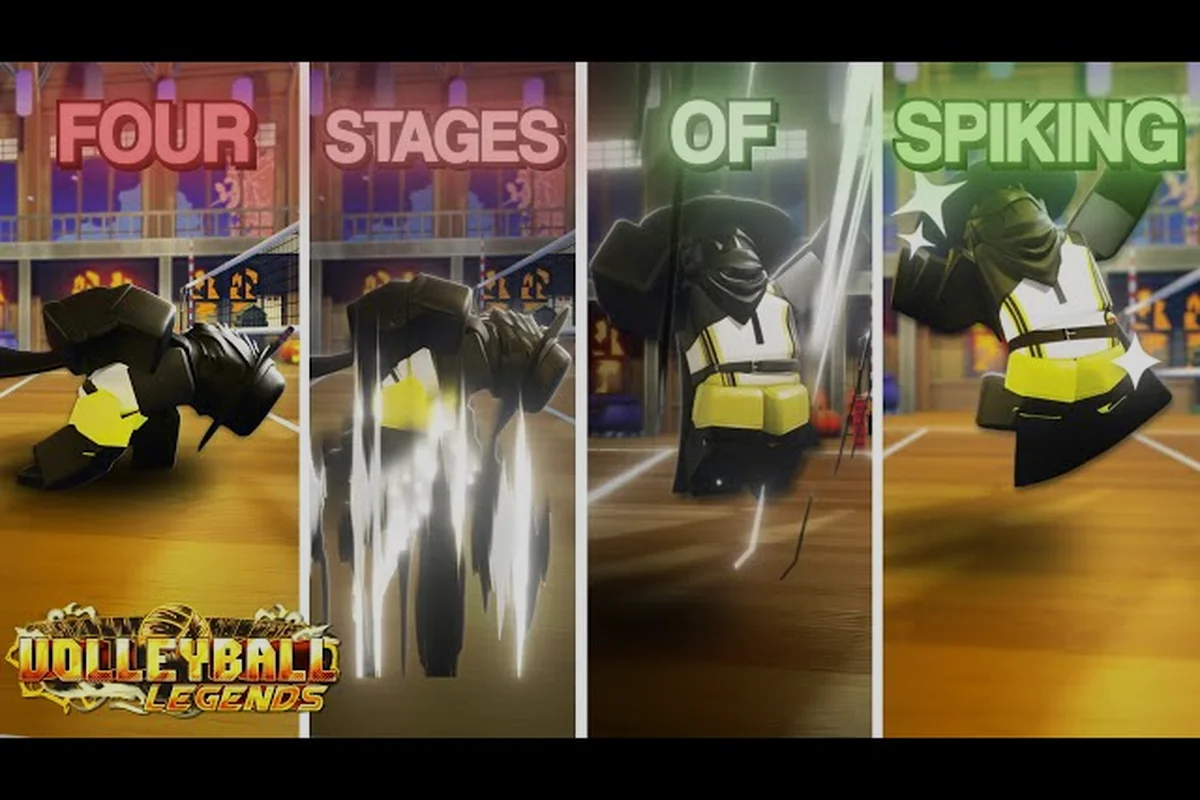
A clean first touch decides whether your team runs an offense or scrambles for survival. This volleyball legends bump guide breaks down the exact platform mechanics, hitbox quirks, and positioning habits that separate reliable receivers from players who shank easy serves. Because every rally starts with a pass, mastering the bump is the single highest-leverage skill you can grind in Volleyball Legends.
Understanding the Bump Hitbox and Platform Angle
The bump in Volleyball Legends is not a simple sphere collision. Community testing from top-ranked players shows that the receive hitbox is a flattened vertical plane extending slightly above and in front of your character's forearms. When you hold the receive input, your character locks into a platform stance that changes the effective contact zone based on your camera angle and movement direction.
The most common mistake new players make is facing the ball directly. According to the Ultimate Volleyball Legends Receiving Guide from Fr0z3nNova, the optimal receive position places the ball slightly to your dominant side, not dead center. This off-center contact lets the game's physics engine apply a cleaner upward vector, which produces a higher, more predictable pass arc.
Platform Angle vs. Ball Trajectory
The angle of your platform matters more than your exact position on the court. When a serve comes in flat and fast, you want your platform tilted slightly backward to absorb pace and pop the ball up. When a serve floats or drops, tilt the platform more vertical to generate forward momentum toward your setter.
| Serve Type | Platform Angle | Contact Point | Resulting Pass |
|---|---|---|---|
| Flat Jump Serve | Slightly backward (15-20°) | Lower forearm | High arc to setter |
| Float Serve | Near vertical (5-10°) | Mid forearm | Controlled push forward |
| Short Drop Serve | Fully vertical | Upper forearm | Quick pop to middle |
| Topspin Drive | Backward (25-30°) | Lower forearm | Absorbed pace, high release |
The difference between a shank and a perfect pass often comes down to just a few degrees of platform tilt. Players who hold the receive input too early lock their platform angle and cannot adjust when the serve breaks late. Instead, tap the receive input just before contact and use your movement keys to fine-tune the angle.
Why Dive Receive Is a Trap
The dive receive looks flashy but is mechanically inferior for standard bumps. Fr0z3nNova's guide explicitly warns against using dive to receive in most situations because the dive animation extends your hitbox horizontally while shrinking the vertical contact window. You trade reliable upward contact for a desperate lunge that often sends the ball sideways or backward.
Use dive receive only when a ball is completely out of reach and you have no other option — for every standard serve, a controlled platform bump with proper footwork beats a dive every time. The dive's horizontal hitbox extension means even a perfectly timed lunge can clip the ball at an angle that sends it into the net or out of bounds, while a planted platform bump keeps your vertical contact window fully open. In 6v6 rotation play, this matters even more: if you dive and fail to control the pass, your setter has to scramble out of position, breaking the rotation and leaving your hitter without a clean approach. Save the dive for emergency digs on hard-driven spikes, not routine serve receive.
Volleyball Legends Court Positions and Rotation Rules
Understanding where to stand is half the battle in this volleyball legends receive guide. Volleyball Legends uses a standard 6v6 rotation system, but the game's camera and movement mechanics make certain positions far more forgiving than others. The volleyball legends court positions are numbered 1 through 6, starting from the back-right and moving counterclockwise.
Position Responsibilities in 6v6
Each position has a specific receive responsibility that shifts based on the volleyball legends rotation rules. When your team is serving, you hold your base position. When receiving, the three back-row players (positions 1, 6, and 5) handle the majority of first touches, while front-row players (positions 2, 3, and 4) prepare to attack.
| Position | Court Zone | Primary Receive Duty | Secondary Duty |
|---|---|---|---|
| Position 1 | Back-right | Deep right serves | Cover line shots |
| Position 2 | Front-right | Short right serves | Block right side |
| Position 3 | Front-middle | Middle transition | Quick attacks |
| Position 4 | Front-left | Short left serves | Block left side |
| Position 5 | Back-left | Deep left serves | Cover cross shots |
| Position 6 | Back-middle | Deep middle serves | Cover tips |
The volleyball legends 6v6 explained system rewards teams that maintain a W formation on serve receive. The three back-row players form the base of the W, while the setter and two front-row hitters stay slightly ahead. This formation gives your setter a clean target while keeping all three deep zones covered.
Rotation Timing and Overlap Rules
Volleyball Legends enforces rotation violations more strictly than casual players expect. When your team wins a rally and earns the serve, every player rotates one position clockwise. The player in position 2 moves to position 1, position 1 moves to position 6, and so on. Failing to rotate before the serve triggers a rotation fault and awards the point to the opposing team.
The key to clean rotations is early communication. Call your rotation before the serve timer starts, and make sure the setter knows which position they are moving into. A late rotation forces your back-row receivers to cover unfamiliar zones, which leads directly to shanked passes and broken offensive flow.
Reading Serves and Pre-Contact Footwork
Elite receivers in Volleyball Legends do not react to serves — they anticipate them. The game's serve animations contain telegraphing cues that reveal the serve type before contact. A server who takes a long approach is almost always going for a jump serve, while a server who stands flat-footed is likely floating or dropping the ball short.
Serve Reading Checklist
Your pre-contact routine should follow a consistent sequence. First, identify the server's stance and approach. Second, watch the toss height — a high toss signals a jump serve, while a low toss signals a float or drop. Third, position your character based on the most likely landing zone, not the server's current position.
-
High toss + long approach: Expect a flat jump serve. Shift back and prepare a backward platform angle.
-
Low toss + no approach: Expect a float serve. Stay balanced and prepare to adjust late.
-
Quick toss + short contact: Expect a drop serve. Step forward and prepare a vertical platform.
-
Sidearm contact: Expect a curve serve. Watch the ball's late break and adjust your platform sideways.
The best receivers in the game use micro-adjustments rather than large repositioning movements. Small taps on your movement keys keep your character balanced and ready to adjust, while full sprints leave you off-balance when the serve arrives. This is because a sprinting character carries forward momentum that delays your platform setup by several frames — enough for a jump serve traveling at high velocity to clip your bump zone's outer edge and send the ball into the net or out of bounds. Instead, treat your positioning like a series of short directional taps that mirror the server's toss and contact cues: if the toss drifts slightly left, tap left once and re-center; if the server's arm angle flattens, tap back a step to create room for a backward platform angle. Against float serves, which wobble unpredictably in the receive zone, this tap-based adjustment lets you react to the ball's final break without committing your character's full body weight, preserving the vertical platform needed to pop the ball cleanly to your setter.
The Center Net Receive Mechanic
Receiving at the center of the net has a unique mechanic that many players overlook. According to community testing, balls that contact your platform while you are directly under the net receive a slight upward boost that can turn a routine pass into an overpass. This happens because the net collision box interacts with your platform hitbox in a way that adds extra vertical velocity.
To avoid this, position yourself one step back from the net when receiving short serves. This gives the ball room to travel upward without catching the net's collision zone. If you must receive directly at the net, use a softer platform angle to reduce the upward boost and keep the ball on your side.
Building a Reliable Receive Routine
Consistency comes from repetition, but only if you practice the right mechanics. This volleyball legends bump guide recommends a three-phase practice routine that builds from isolated reps to full-game scenarios. The goal is to make clean platform contact automatic, so your brain can focus on reading serves and positioning.
Phase 1: Isolated Platform Contact
Start in a private server or empty court and have a teammate serve easy balls directly to your position. Focus exclusively on platform angle and contact point. Do not worry about where the pass goes — just make clean contact every time. Track your clean contact rate and aim for 90% or higher before moving on.
Phase 2: Serve Type Recognition
Once your platform contact is consistent, add serve variety. Have your teammate mix flat serves, floats, and drops without telling you which is coming. Your job is to call the serve type before contact and adjust your platform accordingly. This builds the anticipation skills that separate good receivers from great ones.
Phase 3: Full Rotation Integration
The final phase puts everything together in a 6v6 rotation setting. Play full rallies and focus on maintaining your W formation while rotating correctly. Pay attention to how your receive quality changes when you rotate into an unfamiliar position, and use that feedback to identify weak zones in your game.
| Practice Phase | Focus Area | Success Metric | Time Investment |
|---|---|---|---|
| Isolated Contact | Platform angle | 90% clean contact | 15-20 minutes |
| Serve Recognition | Anticipation | 80% correct calls | 20-30 minutes |
| Rotation Integration | Positional awareness | 70% clean passes in rotation | 30-45 minutes |
The volleyball legends beginner guide covers the fundamental controls and movement mechanics that underpin every receive in this routine. If you are still struggling with basic platform timing, work through that guide before pushing into advanced receive drills.
Common Receive Mistakes and Fixes
Most receiving errors trace back to three root causes: early platform lock, poor footwork, and wrong camera angle — and the frustrating part is that all three compound each other. A frozen platform makes you lunge instead of step, a low camera hides late-breaking serve movement, and before you know it, a routine bump turns into a shanked pass that hands the opponent a free point. Fixing these habits requires deliberate attention during practice, not just more reps: isolate one variable per drill session, record your receives from the server's perspective, and rebuild the receive sequence in slow, intentional stages until the corrections become automatic.
Early platform lock happens when you hold the receive input too long before contact. Your platform angle freezes, and you cannot adjust when the serve breaks late. Fix this by tapping the receive input just before contact and using movement keys to fine-tune your angle.
Poor footwork shows up as reaching for balls instead of moving your feet. Your platform should stay in front of your body, and your feet should do the work of positioning. If you find yourself lunging or diving frequently, slow down and focus on small, balanced steps.
Wrong camera angle makes it hard to judge serve depth and trajectory. Most top receivers use a slightly elevated camera that lets them see both the server and their own platform. Experiment with camera settings until you can track the ball from toss to contact without losing sight of your character.
Advanced Receive Techniques and Style Synergies
Once you have mastered the fundamentals, you can layer in advanced techniques that push your receive game to the next level. These techniques require precise timing and a deep understanding of the game's physics, but they pay off with cleaner passes and more offensive opportunities.
The Soft Touch Redirect
The soft touch redirect is a technique that turns hard-driven serves into controlled passes by absorbing pace with a backward platform angle and a slight downward movement at contact. Instead of popping the ball high, you redirect it low and fast toward your setter, which speeds up your offensive transition.
This technique works best against flat jump serves that arrive with heavy pace. The key is to move slightly backward at the moment of contact, which reduces the ball's forward velocity and produces a softer pass. Practice this against a teammate who can consistently hit hard jump serves.
Style Active Synergies for Receiving
Certain style actives in Volleyball Legends provide direct benefits to your receive game. The volleyball legends style actives guide breaks down which actives boost your defensive stats, but the most impactful ones for receiving include anything that increases reaction speed, platform stability, or movement speed.
A style active that boosts movement speed helps you reach balls that would otherwise require a dive. A style active that increases platform stability reduces the penalty for imperfect contact angles. Experiment with different style combinations to find the setup that best complements your receiving style.
Team-Level Receive Coordination
The best receiving teams in Volleyball Legends do not rely on individual brilliance — they coordinate their coverage zones and communicate constantly. Before each serve, your team should confirm who takes the deep zones, who covers the short zones, and who stays out of the way.
The libero-style player (usually the back-middle position) should take the most aggressive receive role, covering the largest area and calling off teammates when necessary. The two outside back-row players should focus on their line and cross zones, while the front-row players stay ready to transition into attack.
This coordination is especially important in the volleyball legends game modes that feature larger server sizes or modified rules. When the court gets crowded, clear zone assignments prevent the hesitation that leads to balls dropping between two players.
Frequently Asked Questions
What is the best position for learning how to bump in Volleyball Legends?
Position 6 (back-middle) is the best starting position because it gives you the most receive opportunities and the clearest view of the server. You will face serves from every angle, which accelerates your serve-reading development faster than any other position.
Why does my bump keep flying over the net?
Your platform angle is too vertical, which adds forward momentum to the ball. Tilt your platform slightly backward at contact to absorb pace and pop the ball upward instead of forward. Receiving too close to the net also triggers the center net boost mechanic.
How do I stop shanking float serves?
Float serves break late and unpredictably, so you need to delay your platform lock until the last possible moment. Keep your feet balanced, tap the receive input just before contact, and use small movement adjustments to track the ball's final path.
Do style actives actually improve receiving?
Yes, certain style actives boost movement speed and platform stability, both of which directly improve your receive consistency. For example, a Speed-type active can help you close the gap on a short serve that would otherwise force you into a dive receive, while a Stability-type active reduces the platform wobble penalty when you lock your bump slightly off-center. The exact impact depends on your style combination — stacking two movement-boosting actives may leave you too fast to make precise micro-adjustments on float serves, so experiment with different setups to find what works for your playstyle.
When should I use dive receive instead of a standard bump?
Only use dive receive when a ball is completely out of reach and you have no other option. The dive animation extends your hitbox horizontally but shrinks your vertical contact window, making it strictly worse than a controlled platform bump for standard serves.