
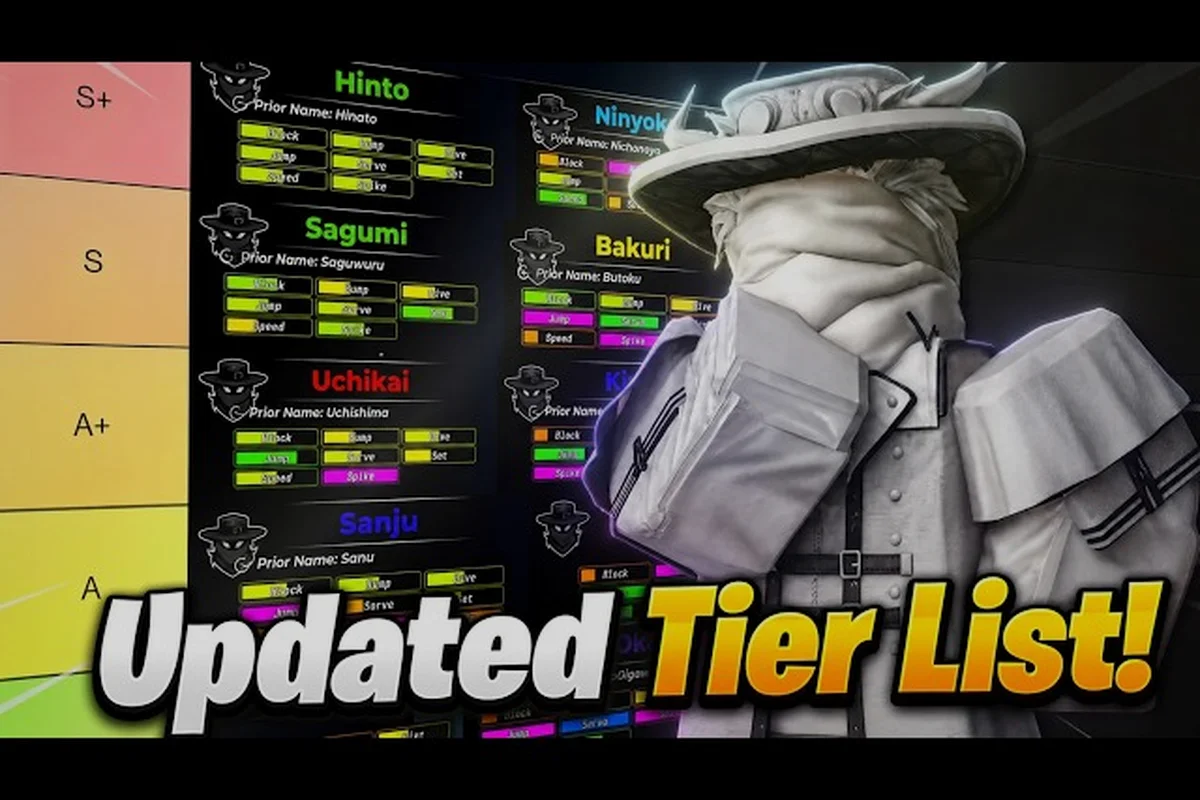
The gap between a losing streak and a ranked climb in Volleyball Legends usually comes down to one decision: which style you lock in before the first serve. Volleyball legends top styles are not a single universal list because a spiker that dominates 3v3 quick matches can become a liability in 6v6 ranked rotations. This guide ranks every major style by game mode strength, exposes the worst traps that waste your spins, and highlights the underrated picks that community testers keep sleeping on.
How Style Rarity Actually Shapes Your Loadout
Style rarity in Volleyball Legends does not always equal power, which is why so many players burn through free spins chasing a flashy Legendary that underperforms in actual matches. The rarity system gates base stat multipliers, active skill cooldowns, and passive trigger rates, but the distribution is uneven across roles. A Secret rarity spiker might carry a 15% higher spike power multiplier than a Rare defender, yet that defender can still win more points through consistent receive coverage and block timing.
Community testing from the current patch suggests that rarity tiers break down into four practical categories. Common styles are starter kits with flat stats and no meaningful passives, while Rare styles introduce the first real role identity through one active skill. Epic styles add a second passive trigger and better scaling, and Legendary styles unlock the highest ceiling but often demand precise timing or specific team compositions. The problem is that spin luck decides which tier you actually pull, and the pity system does not guarantee a top-tier style for your preferred role.
| Rarity Tier | Typical Stat Multiplier | Passive Slots | Best Use Case |
|---|---|---|---|
| Common | 1.0x base | 0 | Learning fundamentals, early matches |
| Rare | 1.15x base | 1 | Filling a specific role in casual lobbies |
| Epic | 1.3x base | 2 | Ranked consistency, balanced loadouts |
| Legendary | 1.5x base | 3 | High-ceiling plays, coordinated teams |
The real trap is assuming that a higher rarity automatically improves your win rate. If you pull a Legendary setter but you main spiker, forcing that style into your rotation often creates worse synergy than a well-timed Epic spiker. Before you spend another batch of volleyball legends free spins, check whether the style you are chasing actually matches the game mode you play most.
Best Spiker Styles for Ranked and Quick Matches
Spiker styles carry the most visible impact because they convert sets into points, and the top options separate themselves through spike angle control, jump height modifiers, and feint recovery speed. In ranked 6v6, the strongest spikers are not always the ones with the highest raw power because blockers at higher ranks read predictable trajectories quickly. A spiker with a wide angle passive can hit around a two-man block, while a pure power spiker gets stuffed repeatedly.
The community tier list from Dot Esports ranks several spiker styles near the top, but the context matters more than the letter grade. A style that earns S-tier in a vacuum can drop to B-tier when you factor in the receive quality of your teammates and the block height of the opposing middle blocker. This is why the best spiker for solo queue is often different from the best spiker for a coordinated three-stack.
Spiker Style Comparison
| Spiker Style | Power | Angle Control | Feint Speed | Ranked Viability |
|---|---|---|---|---|
| Power Cannon | S | C | D | B (predictable) |
| Angle Slicer | A | S | B | S (versatile) |
| Feint Phantom | B | B | S | A (mind games) |
| Balanced Ace | A | A | A | A (consistent) |
The Angle Slicer stands out in ranked because its passive widens the legal spike corridor by roughly 20 degrees, according to player reports, which forces blockers to commit earlier and opens up line shots. The Feint Phantom punishes over-aggressive blockers with a near-instant feint recovery, but it requires you to read the block before you jump. If you want a deeper breakdown of how these actives and passives interact, the style actives guide explains every trigger condition and cooldown window.
Defensive Styles That Quietly Carry Ranked Matches
Defenders and liberos rarely get highlight clips, but volleyball legends top styles for defense are the reason many ranked teams stop conceding free points. A strong defensive style improves receive stability, dig range, and block timing windows, and these small advantages compound over a full set. The best defender styles do not need flashy actives because their passives trigger on every touch, which means consistent value instead of situational spikes.
The Iron Wall defender style remains a top pick for middle blockers because its passive reduces the opponent's spike power by a flat percentage when you commit to a block. The Sand Digger libero style extends the dig radius by a noticeable margin, turning would-be aces into playable balls. Both styles sit in the Epic tier, which means they are far more accessible than Legendary spikers and still anchor a ranked rotation effectively.
Defensive Style Value Table
| Defensive Style | Primary Passive | Secondary Passive | Best Mode |
|---|---|---|---|
| Iron Wall | Block power reduction | Faster block reset | 6v6 ranked |
| Sand Digger | Extended dig radius | Lower receive error | 6v6 ranked |
| Net Sentinel | Higher block jump | Spike trajectory read | 3v3 quick |
| Backline Anchor | Receive stability | Serve receive boost | 6v6 ranked |
The Backline Anchor deserves more attention than it gets because serve receive is the most underrated phase of the game. If your team cannot pass the first ball cleanly, your spiker never gets a real chance to score. For a full comparison of defensive options and how they pair with offensive styles, the best defender style breakdown covers synergy picks and counter matchups.
The Worst Styles That Waste Your Spins
Not every style in Volleyball Legends earns a spot in a serious loadout, and some of the volleyball legends worst styles actively hurt your team because they bait you into bad habits. The most common trap is a style with a high-risk active that looks impressive on paper but has a long cooldown and a narrow success window. When that active whiffs, you are left playing a below-average base kit for the next thirty seconds.
The Trick Serve Specialist is a frequent offender because its curve serve looks unstoppable in casual lobbies but gets read easily by ranked players who have seen the same arc dozens of times. The One-Touch Wonder setter style suffers from a similar problem: its boosted first touch is excellent, but the passive falls off sharply after that, leaving you with no real advantage in extended rallies. These styles are not unplayable, but they demand a level of execution that most players cannot sustain.
| Worst Style | Core Problem | Why It Fails | Better Alternative |
|---|---|---|---|
| Trick Serve Specialist | Predictable curve | Ranked players read it | Flat Power Serve |
| One-Touch Wonder | Front-loaded passive | Falls off in rallies | Balanced Setter |
| Glass Cannon | Huge power, no defense | Dies to any block | Angle Slicer |
| Flashy Feint | Long cooldown | Dead time after whiff | Feint Phantom |
The Glass Cannon is the most painful pull because it looks like a top-tier spiker on the stat screen. Its spike power is genuinely elite, but the negative defensive modifiers mean you become a target on serve receive and a liability in transition. If you pulled one of these styles and want to know whether it is salvageable, the style rankings comparison breaks down which low-tier picks still have niche value.
Underrated Styles That Deserve More Respect
The volleyball legends underrated styles are not hidden secrets, but they get ignored because their stat sheets look unimpressive at first glance. The Tempo Setter is a perfect example: its raw numbers are average, but its passive reduces the delay between receive and set by a meaningful margin, which lets your spiker hit before the block fully forms. In a game where timing decides most points, that passive is worth more than a flat power boost.
The Rotation Reader libero style is another sleeper because its passive highlights the likely spike direction after the opponent's setter touches the ball. This information is not a guarantee, but it gives your blockers a head start on positioning, and that edge converts into more stuff blocks over a full match. Community testers report that teams running a Rotation Reader alongside a solid middle blocker win noticeably more long rallies.
Underrated Style Value Table
| Underrated Style | Hidden Strength | Why Players Skip It | Ideal Partner |
|---|---|---|---|
| Tempo Setter | Faster set timing | Low raw stats | Power Cannon |
| Rotation Reader | Spike direction read | Passive feels passive | Iron Wall |
| Serve Anchor | Consistent serve receive | No highlight plays | Angle Slicer |
| Rally Extender | Stamina regen passive | Slow early game | Any defender |
The Rally Extender is especially valuable in ranked because long rallies drain stamina, and a tired spiker loses jump height and spike power. Its passive regenerates a small amount of stamina after every successful dig, which keeps your team fresher in the third set. These styles will not carry a bad team, but they raise the floor of a decent one, and that is exactly what solo queue players need.
Spin Luck and Free Spin Strategy
Volleyball legends spin luck is the most frustrating part of building a loadout because the gacha system does not care about your role preference. You can pull three Legendary setters in a row while your friend pulls a top-tier spiker on their first free spin. The key is to treat spins as a long-term resource rather than a short-term gamble, which means saving your volleyball legends free spins for banners that feature styles you actually want.
Free spins come from several sources, including daily login rewards, event milestones, and occasional code drops. The free spins codes guide tracks the current working codes so you do not miss limited-time spin opportunities. The smartest approach is to bank spins until a banner features a style that fits your main role, then spend in batches of ten because multi-spins often include a guaranteed Rare or higher.
| Spin Source | Frequency | Average Yield | Best Practice |
|---|---|---|---|
| Daily login | Daily | 1 spin | Claim every day |
| Event milestones | Weekly | 3-5 spins | Complete all tasks |
| Promo codes | Irregular | 2-10 spins | Redeem immediately |
| Ranked rewards | Seasonal | 5-15 spins | Push before reset |
The pity system is not officially documented, but community data suggests that a guaranteed Epic or higher appears roughly every twenty spins. That means a bad streak of ten Commons is not a reason to rage-spend your saved currency. Patience with spin luck is a skill in itself, and the players who climb consistently are the ones who build around what they pull instead of chasing a single dream style.
Frequently Asked Questions
Which volleyball legends top styles are best for beginners?
The Balanced Ace spiker and Backline Anchor defender are the best beginner styles because their passives trigger consistently without demanding precise timing. Both sit in the Epic tier, which means they are reasonably accessible through free spins, and they teach fundamental positioning without rewarding bad habits.
Are volleyball legends worst styles completely unusable?
No, but they require specific conditions to work. The Trick Serve Specialist can still surprise players in casual lobbies, and the Glass Cannon works if your team covers your defensive weaknesses. In ranked matches, however, these styles get punished consistently, so they are better left for experimentation.
How does volleyball legends style rarity affect gameplay?
Rarity determines base stat multipliers, passive slot count, and active skill cooldowns. Legendary styles have the highest ceiling with three passive slots and a 1.5x base multiplier, but Epic styles are often more consistent because their passives trigger more reliably in real matches.
Can I improve my volleyball legends spin luck?
You cannot change the underlying odds, but you can maximize your free spin income through daily logins, event tasks, and promo codes. Saving spins for role-specific banners and spending in batches of ten gives you the best chance at pulling a style that actually fits your playstyle.
Do underrated styles work in high ranked play?
Yes, and several underrated styles outperform higher-rarity picks in specific team compositions. The Tempo Setter and Rotation Reader provide utility that raw stats cannot match, and coordinated teams often prefer these consistent passives over flashy Legendary actives that whiff under pressure.