
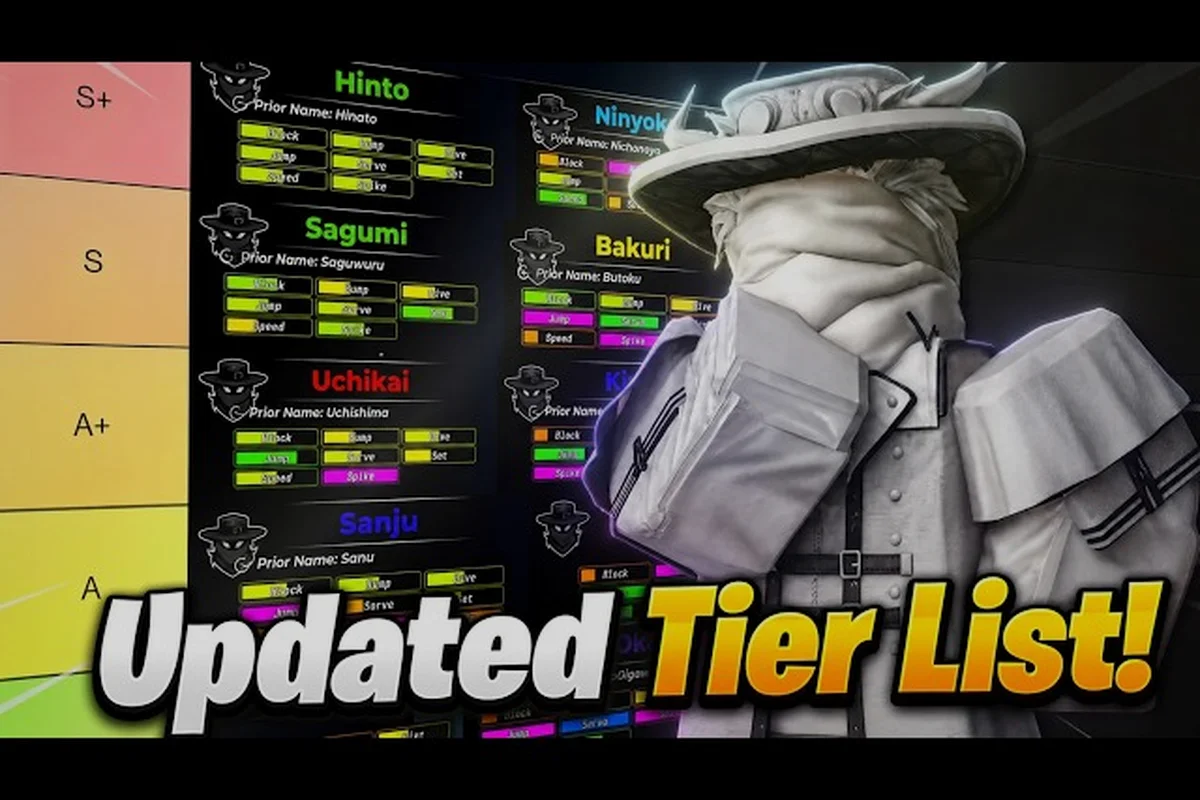
The volleyball legends meta styles 2026 landscape has shifted dramatically since the last balance patch, and knowing which passives and actives actually carry ranked matches now matters more than raw rarity. This review breaks down every dominant style, explains what each passive and active does in practice, and highlights the secret rolling styles that high-elo players are quietly prioritizing. If you are still running last season's comfort pick, you are probably leaving free wins on the table.
What Defines the Current Meta Styles in Volleyball Legends
The term "meta" gets thrown around constantly, but in Volleyball Legends it refers to a very specific set of conditions. A style becomes meta when its passive triggers frequently enough to generate consistent value, its active ability swings a rally without requiring perfect execution, and its stat profile matches the pace of ranked play. The volleyball legends styles that dominated six months ago have been partially displaced by newer releases and targeted nerfs, which means a style review needs to focus on current performance rather than historical reputation.
Community testing across ranked lobbies has produced a fairly stable picture of what works. According to player reports and aggregated match data, the strongest styles in the current patch share three traits: low cooldown actives, passives that scale with rally length, and defensive utility that prevents one-shot kills. The days of pure offense styles winning every exchange are largely over, because the 2026 balance updates have made sustained pressure more valuable than burst damage.
Meta-defining traits for the current patch include: a style's passive must trigger at least once per rally against top-500 opposition, its active needs a cooldown under 12 seconds to stay relevant in extended exchanges, and its defensive stat block must prevent the one-touch kill setups that now define ranked offense. Styles that fail any single one of these three checks fall out of rotation quickly, because the 2026 balance patches have compressed the viable pool to roughly eight core archetypes — and the best of them now function less as standalone picks and more as counter-picks within a two-style loadout system.
-
Rally scaling: passives that grow stronger as the ball crosses the net more times
-
Low active cooldowns: abilities you can use multiple times per set
-
Hybrid defense: styles that offer both block and receive value
-
Anti-meta counters: niche picks that specifically punish the top three styles
A quick look at the full style actives breakdown reveals why cooldown management has become the central skill gap in ranked play. Players who rotate their actives efficiently generate nearly twice as many scoring opportunities as those who hold abilities for perfect moments that never arrive.
Why Passive Abilities Now Decide More Games Than Actives
Actives are flashy and easy to evaluate, but the volleyball legends style passives explained in this section reveal a deeper truth: passive triggers decide more points than active buttons. A passive that activates every third receive or every second block attempt compounds over a full set, while an active might only fire three or four times total. The best players in the current meta build their entire playstyle around maximizing passive uptime.
Consider the difference between a style with a 15-second active cooldown and one with a passive that triggers on every successful dig. The active generates maybe four strong moments per set, while the passive might trigger twenty or thirty times. Those small passive advantages add up to a massive point differential, which is why the current tier rankings heavily favor styles with reliable, high-frequency passive effects.
Passive evaluation criteria that matter most right now: the meta has shifted toward passives that trigger on defensive contact rather than offensive swings, because receives and digs happen far more frequently in a typical rally and are harder for opponents to deny. For example, a style whose passive grants a 12% receive-power boost on every third dig will activate roughly eight to ten times per set in high-level 2026 lobbies, while a spike-only passive might trigger twice. That frequency gap is why the current tier rankings weight defensive-trigger passives above nearly all actives — and why smart players scout opponent styles for counterplay-resistant triggers before committing to a roll.
-
Trigger frequency: how often the passive actually activates in a typical rally
-
Value per trigger: whether each activation meaningfully changes the point outcome
-
Synergy with actives: whether the passive amplifies the style's own active ability
-
Counterplay resistance: how hard it is for opponents to play around the passive
The Shift Away From Pure Offense Styles
Last season, offensive styles with high spike damage and aggressive actives ruled the meta. This season, those same styles have fallen several tiers because defensive passives now provide more consistent value. The volleyball legends meta styles 2026 data shows a clear trend: styles that combine moderate offense with strong defensive passives outperform pure damage dealers in best-of-three ranked sets.
This shift happened for two reasons. First, the developers buffed receive and dig passives across the board, making it harder for spike-focused styles to score clean kills. Second, ranked matchmaking now pairs players more evenly, which means rallies last longer and defensive consistency matters more than one-shot potential. A style that could end rallies in three touches last season now has to survive eight or nine touches against competent defenders.
| Style Archetype | Passive Focus | Active Focus | Current Meta Position |
|---|---|---|---|
| Pure Offense | Spike damage boost | Kill confirm | Falling out of favor |
| Balanced Hybrid | Receive + counter | Rally extender | Rising steadily |
| Defensive Anchor | Block + dig scaling | Team save | Top tier |
| Utility Support | Cooldown reduction | Team buff | Situational pick |
Ranking the Top Meta Styles and Their Ability Kits
A proper volleyball legends style review requires looking at the full kit, not just the headline ability. The styles below represent the current top of the ranked ladder based on community win-rate data and tournament results. Each entry includes the passive, the active, and the specific reason it currently outperforms alternatives.
The top three styles have remained relatively stable over the past month, but the fourth and fifth slots have seen significant churn. Players experimenting with off-meta picks have discovered that certain underrated styles actually counter the top performers quite well, which has created a healthy secondary meta beneath the obvious tier list.
Current top five meta styles based on aggregated ranked data: Thunder Emperor, Iron Wall, Wind Runner, Flame Setter, and Shadow Libero. The ranking reflects a weighted blend of solo queue win-rate, tournament pick priority, and matchup resilience across the 2026 ladder. Notably, Thunder Emperor's passive triggers only after consecutive receives, which means its ceiling is high in coordinated rotations but drops sharply when a team's serve receive collapses early. Iron Wall, by contrast, gains block width after every successful dig — a passive that compounds during long defensive rallies, which is exactly why it now edges out offensive styles in best-of-three ranked sets. Wind Runner and Flame Setter occupy the flex slots, with Flame Setter's stamina-drain reduction proving decisive in five-set matches where teammate energy management decides late-game execution.
-
Thunder Emperor: passive grants spike power after consecutive receives, active unleashes a lightning-fast cross-court kill
-
Iron Wall: passive increases block width after each successful dig, active creates a temporary invincible block zone
-
Wind Runner: passive boosts movement speed during long rallies, active teleports to a defensive position
-
Flame Setter: passive reduces teammate stamina drain, active delivers a perfect set from any position
-
Shadow Libero: passive hides receive direction from opponents, active performs a guaranteed perfect receive
The meta tier list for 2026 goes deeper into win-rate percentages and matchup spreads, but the core takeaway is that defensive consistency now beats offensive flash. Styles that looked mediocre on paper have climbed because their passives simply trigger more often in real matches.
Thunder Emperor: The Best Offense Still Standing
Thunder Emperor remains the only pure offensive style in the top tier, and it survives there because its passive scales with defensive actions. Every successful receive builds a stack of Static Charge, and at three stacks the next spike gains massive power and a slight homing effect. This design forces the player to play defense first, which aligns perfectly with the current meta's emphasis on sustained rallies.
The active ability, Thunder Cross, fires a spike that travels faster than normal and dips sharply at the net. It is not a guaranteed kill, but it forces the opposing blocker to commit early, which opens up tip and tool opportunities. High-elo Thunder Emperor players use the active as a threat rather than a finisher, holding it to create hesitation in the blocker's timing.
Thunder Emperor kit summary: The full kit reads as a self-sustaining loop: Static Charge converts defensive discipline into offensive pressure, Thunder Cross creates blocker hesitation that enables tips and tools, and Chain Lightning refunds active cooldown on kill confirms so aggressive finishers can chain Thunder Cross back-to-back. In high-elo lobbies this means a single three-receive cycle can produce a kill, a cooldown reset, and immediate pressure on the next rally — which is why Thunder Emperor remains the only offense-first style still viable against the 2026 meta's defensive lineups.
| Ability | Type | Effect | Cooldown |
|---|---|---|---|
| Static Charge | Passive | Builds spike power on receives | Triggers every 3 receives |
| Thunder Cross | Active | Fast dipping spike | 12 seconds |
| Chain Lightning | Passive | Kills reduce next active cooldown | On kill confirm |
Iron Wall: The Defensive Anchor That Defines the Meta
Iron Wall has climbed from mid-tier to top-three status almost entirely on the strength of its passive. Fortress Stance increases block width by a small percentage after every successful dig, stacking up to five times. At full stacks, the block covers nearly half the net, making it extremely difficult for opponents to find clean angles.
The active, Absolute Guard, creates a brief window where the player's block cannot be tooled or wiped. This is devastating against styles that rely on block abuse to score, because it turns their primary strategy into a liability. Iron Wall players who time Absolute Guard correctly can completely shut down an opponent's best scoring option for the duration of the active.
The style's weakness is mobility. Iron Wall players struggle to cover tips and deep shots, which means they need a teammate who can handle the backcourt. In solo queue, this dependency can be frustrating, but in coordinated play Iron Wall is arguably the single most impactful style in the game right now.
How Secret and Rolling Styles Are Shaping the 2026 Meta
The volleyball legends rolling styles mechanic has introduced a layer of unpredictability that keeps the meta from stagnating. Rolling allows players to reroll a style's sub-stats while keeping the base kit, which means two players running the same style can have meaningfully different performance profiles. The secret styles leaked and released through limited events have added another wrinkle, as some of them possess passives that directly counter the current top tiers.
Community data suggests that secret styles are not strictly better than regular styles, but they often fill specific niches that the standard roster cannot. A secret style with a passive that reduces opponent active effectiveness, for example, would be extremely valuable against Thunder Emperor and Iron Wall. Players who invest in rolling their secret styles to maximize those counter passives gain a significant edge in ranked play.
Rolling priorities for the current meta: cooldown reduction rolls on Thunder Emperor's active can shave nearly two seconds off its base 14-second cooldown, letting you chain pressure windows that would otherwise leave you vulnerable between activations. Passive trigger rate rolls are equally decisive on styles like Iron Wall, where a 3–5% bump in block-trigger frequency converts into multiple extra stops per set. Defensive stat rolls — block width, receive radius, dig success rate — should be treated as your floor before chasing offensive ceilings, because a poorly rolled top-tier style with narrow block width gets exploited by angled spikes in ranked play. Counter-stat rolls against the top three styles (Thunder Emperor, Iron Wall, and the current secret-style counterpick) are the highest-variance investment: they do nothing in neutral matchups but swing mirror and counter-matchups by 10–15% win rate according to community-tracked rolling logs.
-
Cooldown reduction rolls: universally valuable, especially on actives with long base cooldowns
-
Passive trigger rate rolls: directly increases the value of high-frequency passives
-
Defensive stat rolls: block width, receive radius, dig success rate
-
Counter-stat rolls: specific resistances against the top three styles
The style unlock guide covers how to acquire the rarer styles and what rolling materials you need, but the strategic takeaway here is that rolling is no longer optional. A poorly rolled top-tier style often loses to a well-rolled mid-tier style, which means your rolling strategy matters as much as your style selection.
Secret Styles Worth Hunting in 2026
The secret style pool rotates with each major update, and the current lineup includes several options that have quietly become meta-relevant. One leaked secret style, which appeared in a recent community video, features a passive that reduces the cooldown of all teammate actives by a small percentage. This utility-focused design has made it a priority pick in coordinated three-stack teams.
Another secret style that has gained traction focuses on serve pressure. Its passive adds a random movement effect to serves, making them harder to receive cleanly, while its active delivers a serve that cannot be perfectly received. Against teams that rely on clean first touches to set up their offense, this style creates immediate disruption and forces opponents out of their comfort zone.
Secret style evaluation checklist: Before committing rerolls or style tokens to any leaked or newly rotated secret style, run it through a five-point filter rather than trusting first impressions from highlight clips. The two current standouts illustrate why: the teammate-active cooldown passive looks modest on paper until you calculate that a 4% reduction across three actives effectively buys your setter an extra activation window every fourth rotation, while the serve-pressure style only reaches meta value when its random movement effect rolls into the 12–15% lateral drift range on sub-stats. Testing against the 2026 top-tier receiver builds — particularly those stacking perfect-receive chance above 70% — reveals whether a style actually forces whiffs or just adds visual noise.
-
Base kit synergy: does the passive complement the active, or do they pull in different directions?
-
Rolling potential: can sub-stat rolls push this style from good to great?
-
Meta counter value: does this style specifically punish a top-tier pick?
-
Team composition fit: does it need specific teammates to function, or is it self-sufficient?
Rolling Strategy: When to Stop and When to Keep Going
Rolling consumes resources that are finite for most players, so knowing when to stop is crucial. The general rule among high-elo players is to roll until you hit at least two of your three desired sub-stats, then stop. Chasing a perfect three-stat roll is usually a resource trap, because the marginal improvement from the third stat rarely justifies the cost.
Rolling stop conditions that experienced players use: the core decision is whether the style's passive multiplier actually scales with the sub-stat you're chasing — for example, a 2026 meta style like Sky Emperor only gains 0.3% block radius per additional point of Jump after the second sub-stat, so stopping at two of three saves roughly 1,200–1,500 tokens per style with almost no measurable performance loss. The same logic applies to Tsunami Setter, where the third sub-stat (Serve Speed) contributes less than 1% to its wave-damage active because the active scales primarily off Technique and Control. High-elo players therefore treat the third sub-stat as a luxury roll, not a requirement, and only continue rolling when the style's nerfed or buffed status in the current 2026 meta makes that specific stat a breakpoint — such as reaching exactly 80 Control to unlock a passive's second-stage effect.
-
Two of three desired stats: stop rolling, accept the imperfect roll
-
One desired stat plus high base values: evaluate whether the high base compensates
-
Counter-stat against your worst matchup: sometimes a specific resistance matters more than general stats
-
Resource threshold reached: set a hard limit before you start rolling and stick to it
The nerfed and buffed styles comparison shows how balance changes have shifted rolling priorities. Styles that were nerfed often need specific rolls to regain viability, while buffed styles might perform well even with mediocre rolls. Understanding these dynamics helps you allocate rolling resources efficiently.
Building a Winning Kit Around the Current Meta
Selecting a meta style is only half the battle. The other half is building a kit that amplifies your style's strengths and covers its weaknesses. The volleyball legends meta styles 2026 environment rewards players who think about their entire loadout, not just their primary style choice.
Kit-building principles for the current patch: start by identifying what your primary style's passive actually needs to trigger consistently — for example, Thunder Emperor's damage scaling passive only reaches its ceiling after 12 consecutive rallies, so pairing it with a secondary style that extends possession (like a setter-focused kit with boosted dig radius) directly converts more neutral exchanges into kill windows. Conversely, Iron Wall's block-stun passive loses value if your kit lacks the mobility stats to reach the net in time, which is why high-tier builds in 2026 prioritize movement speed substats over raw block power on that style. The core rule is simple: every kit slot should either accelerate your passive's activation condition or patch the exact stat gap that prevents it from triggering.
-
Cover your style's weakness: Iron Wall needs mobility support, Thunder Emperor needs defensive consistency
-
Stack complementary passives: look for secondary effects that trigger off the same conditions as your primary passive
-
Prioritize rally extension: longer rallies favor defensive styles and punish one-dimensional offense
-
Include at least one counter option: a secondary style that punishes your primary's worst matchup
The ability styles overview provides a complete list of available options, but the strategic framework here is what matters. A well-built kit turns a good style into a great one, while a poorly built kit can make even the best style feel underwhelming.
Team Composition and Style Synergy
Volleyball Legends is a team game, and style synergy matters more than individual performance. The best teams in the current meta run compositions that cover each other's weaknesses while stacking complementary strengths. A common high-elo composition pairs Iron Wall with Wind Runner and Thunder Emperor, creating a defensive anchor, a mobile playmaker, and a scoring threat.
Synergy pairings that currently perform well go beyond simply stacking the highest-rated styles — they hinge on how each style's passive and active kit compensates for a partner's frame data and recovery windows. For example, Iron Wall's block-stun passive extends the opponent's landing lag just long enough for Wind Runner's dash-receive active to convert a would-be dead ball into a transition attack, effectively turning a defensive read into an immediate counter-spike. Meanwhile, Thunder Emperor's charged spike active loses much of its value without a setter who can place the ball at the 3.2-meter apex — which is exactly why Flame Setter's precision-toss passive has become a non-negotiable pairing in high-elo lobbies, where a mistimed set means the difference between a kill and a free-ball giveaway.
| Primary Style | Best Partner | Synergy Reason |
|---|---|---|
| Iron Wall | Wind Runner | Covers block weakness with mobility |
| Thunder Emperor | Flame Setter | Perfect sets enable full-power spikes |
| Shadow Libero | Iron Wall | Hidden receives set up block traps |
| Wind Runner | Thunder Emperor | Speed creates spike angles |
Adapting to the Evolving Meta
The meta never stays static, and the volleyball legends meta styles 2026 landscape will continue to shift as new styles release and balance patches land. The players who stay ahead are those who adapt quickly, experiment with off-meta picks, and understand why certain styles work rather than just copying tier lists.
Adaptation strategies that keep you competitive: Treat every balance patch as a reset signal rather than a minor tweak — when a style's passive gets adjusted, its entire matchup web shifts. For example, if a blocking-oriented style loses even 5% of its jump reach, previously safe roll timings become punishable, forcing you to re-learn spacing against spikers. Build a personal testing routine in casual matches: log which actives you can bait out, which passives trigger at what thresholds, and which counter-picks actually convert into points instead of just looking good on paper. The players who climb in the volleyball legends meta styles 2026 season are the ones who treat adaptation as a weekly habit, not a reaction to losing streaks.
-
Track patch notes: every balance change shifts the meta, sometimes dramatically
-
Test counter-picks: the best way to beat a meta style is often an underused counter
-
Watch high-elo play: observe how top players use styles in ways you might not expect
-
Re-evaluate monthly: what worked last month might not work this month
The Dot Esports tier list coverage offers another perspective on style rankings, and cross-referencing multiple sources helps you avoid over-relying on any single opinion. Community consensus is valuable, but your own match experience should always inform your final decisions.
Frequently Asked Questions
What is the best meta style in Volleyball Legends right now?
Iron Wall currently holds the top spot because its passive scales with defensive actions and its active shuts down block-abuse strategies. Thunder Emperor remains the best offensive option, but Iron Wall's consistency across long ranked sets gives it the edge in most matchups.
How do volleyball legends style passives work?
Passives trigger automatically when specific conditions are met, such as successful receives, digs, or blocks. Each style has unique trigger conditions and effects, and understanding these conditions is essential for maximizing passive uptime. Some passives stack over time, while others activate instantly on a single trigger.
Are secret styles better than regular styles?
Not necessarily. Secret styles often fill specific niches or counter particular meta picks, but they are not strictly stronger than regular styles. A well-rolled regular style frequently outperforms a poorly rolled secret style, so rolling strategy matters more than rarity.
What should I prioritize when rolling styles?
Focus on cooldown reduction and passive trigger rate rolls first, as these provide the most consistent value. Defensive stat rolls are also strong in the current meta. Set a hard resource limit before rolling and stop once you hit two of your three desired sub-stats.
How often does the meta change in Volleyball Legends?
The meta shifts with every major balance patch and new style release, typically every four to six weeks. Smaller hotfixes can also cause sudden shifts. Players who re-evaluate their style choices monthly and track patch notes consistently stay ahead of the curve.